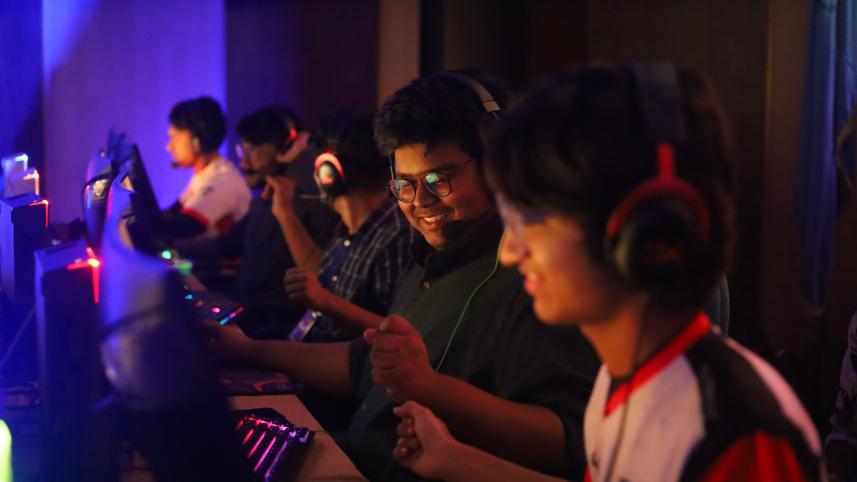
Competitive video gaming has evolved from informal tournament brackets to a billion-dollar industry. Over the past two decades, esports has attracted audiences worldwide, reaching record viewership and gaining recognition as an organized competitive discipline. How did this growth occur, and what factors contributed to esports’ rise as a global entertainment industry?
The global esports audience expanded significantly over the 2010s and early 2020s. In 2016, the figure was around 292 million, encompassing 148 million dedicated enthusiasts and 144 million occasional viewers. By 2022, this number had risen to an estimated 532 million, according to figures from Newzoo.
How Esports Went From Small Competitions to Global Events
The transition from local gaming competitions to organized, international events was a key driver of growth. As competitive gaming evolved, so too did the structure of events.
Professional teams emerged, recruiting top talent and creating fan bases that rivaled those of traditional sports. International championships, such as the League of Legends World Championship, attracted millions of simultaneous viewers. The 2024 final generated approximately 25.3 million hours watched, peaking at 6.94 million concurrent viewers, excluding Chinese streaming platforms.
These tournaments offered substantial prize pools, helping establish esports as a viable career path. The International 2021, a Dota 2 event held in Bucharest, featured a record-breaking prize pool of $40,018,195. This wasn’t only a draw for players – it also underscored esports’ potential for spectacle and financial success.
How Twitch and YouTube Made Esports Easier to Watch
Online broadcasting platforms, most notably Twitch and YouTube, played a critical role in popularizing esports. During 2020, Twitch experienced a 67.36% increase in watch time, reaching 18.41 billion hours. This surge in consumption coincided with and supported the growth of competitive gaming.
Streaming provides greater accessibility, putting live esports coverage within reach of global audiences. Competitive gaming fans can enjoy live match coverage, follow their favorite players, and engage with the community in real time. Highlight videos help introduce new viewers, while active hashtags make esports a part of broader online conversations.
How Streaming Viewership Differs From Esports Audiences
However, it’s important to distinguish between general gaming viewership and esports-specific content. While the immense growth of gaming on platforms like Twitch undoubtedly contributed to esports’ popularity, competitive gaming remains a subset of overall streaming content.
Esports viewers may consume live tournament streams, team highlights, or individual creator content – often a blend of all three. The sheer volume of gaming content on these platforms contributes to esports’ reach, but the dedicated, competitive nature of esports matches sets it apart.
Why Esports Grew During the COVID-19 Pandemic
Esports growth during the COVID-19 period reflects shifting entertainment consumption and the resilience of online communities. The pandemic coincided with a 69% year-over-year increase in video-game livestreaming watch time in 2020, illustrating the overlap between gaming and broader audience trends.
However, this link is correlative, not conclusive. Esports’ growth predates the pandemic, and its rise owes to ongoing factors such as improved accessibility, the emergence of professional competition, and a dedicated fan base. It’s also not pandemic-dependent. Esports continues to attract players and viewers post-pandemic, driven by the fundamental appeal of skilled, strategic gaming.
How Esports Tournaments Adapted During Lockdowns
Streaming platforms and esports events adapted to continue engaging audiences during lockdowns. As traditional entertainment options dwindled, gaming provided an outlet for leisure and social interaction. Online entertainment took different forms, from esports broadcasts to casino games featured on https://casinaportal.se/, where licensing and playing conditions remain important considerations. Esports served as an alternative, a form of entertainment with its own dedicated audience, already positioned to thrive online.
However, it’s important not to overstate the pandemic’s impact on esports. The industry was already expanding prior to 2020, and could have continued on this trajectory regardless. The most notable effect of COVID-19 was the acceleration of existing trends, not the creation of new ones.
How Professional Teams and Major Tournaments Attract Fans
Major tournaments and professional teams provide esports with the structure and appeal of traditional competition. Esports fans follow the fortunes of their favorite teams, develop rivalries, and watch tournaments as major competitive events.
A key draw is the scale of these events. The 2024 League of Legends World Championship final attracted a peak of 6.94 million simultaneous viewers and generated 25.3 million hours watched, excluding Chinese streaming platforms. Prize pools have reached historic heights, with The International 2021 surpassing $40 million. As tournaments and participation expand, so can public interest in esports.
How Esports Fan Culture Differs From Traditional Sports
However, the comparison with traditional sports shouldn’t be pushed too far. Esports competitions and presentations have their own unique characteristics. Traditional fan dynamics, such as place-based home-and-away games, don’t readily translate. Esports teams, with their global presence and digital formats, often operate under different structures.
But the core spectator elements are strikingly similar. High-stakes competition, extensive media coverage, and passionate fan communities abound. At their best, esports offer all the tension and drama of top-tier play with the added accessibility of live, interactive broadcasts.
Why Mobile Gaming Brought More Attention to Esports
Smartphone gaming has become a vital part of esports, proving that competitive gaming needn’t be tied to expensive setups or desktop PCs. Mobile competitions such as Mobile Legends: Bang Bang Professional League Indonesia showcased the format’s potential, with its 2025 Season 15 reaching 4,132,224 peak concurrent viewers and 113,297,084 hours watched.
Mobile gaming offers both entry-level accessibility and competitive depth. It helps esports appeal to broader audiences and reach new demographics. The same shift toward smartphone access is visible in other gaming sectors, including the mobile casino platforms reviewed on https://canadacasinotop.com/, where payment options and licensing matter alongside convenience. The fact that competitive gaming need not require a dedicated gaming computer makes it a more accessible and mainstream phenomenon.
Mobile Esports Alongside PC and Console Competition
However, the shift doesn’t unseat PC games in the esports sphere. PC and console competitions remain important. Mobile games diversify the scene, but they don’t replace established PC tournaments. PC titles like Dota 2 have historically offered some of the largest prize pools, while League of Legends continues to attract enormous viewership. Mobile esports players aren’t necessarily newcomers – many are experienced gamers competing on different devices. Mobile titles are another competitive format, not a replacement.
Why Platform Variety Matters
That said, mobile gaming’s esports dimensions show that competitive gaming isn’t tied to a particular platform, or to the dedicated setups more often associated with esports. It’s about skilled gaming in a competitive context, adaptable to a wide array of formats and devices. If a game has a competitive structure, mobile or otherwise, it can attract esports interest.
How Esports Became Popular in Ukraine
Esports grew against a national backdrop of recognition and achievement in Ukraine. The national government recognized competitive gaming as a sport in September 2020, with the Ministry of Youth and Sports officially adding esports to the national register of recognized sports.
This reflected not only a broader trend, but also Ukraine’s growing presence on the international esports stage. This was illustrated by the March 2024 victory of Natus Vincere (NAVI) at the Copenhagen Major, where the Ukrainian esports organization defeated FaZe Clan 2–1 in the first Counter-Strike 2 Major, receiving $500,000 in prize money.
While Ukraine’s esports industry faces challenges, its growth illustrates how local scenes can adapt the global esports model to create their own presence on the international stage. Recognizing regional champions, fostering national interest, and leveraging top-tier tournament success can help sustain esports growth in Ukraine, and may do so in emerging markets across the globe.
What Could Influence the Future of Esports?
As the esports industry looks toward the 2030s, factors like streaming, mobile tournaments, and international competitions will continue to be crucial. Esports World Cup 2025 generated 183,944,163 hours watched, up 51.3% from 2024. This reflects strong audience interest in tournaments and the importance of streaming in reaching viewers.
However, one important question remains: How might the Olympic Esports Games shape esports’ future? The International Olympic Committee (IOC) first approved the Olympic Esports Games in 2024, only to announce the end of its partnership with the Saudi Olympic and Paralympic Committee on October 30, 2025. As of November 2026, a new model is under development, with no confirmed inaugural date. The matter is consequential – the Olympic brand carries weight, and the IOC’s involvement could lend esports even greater visibility.
Sustainability and Business Model Challenges
At the same time, the IOC’s approach reflects what may be one of the defining challenges for esports going into the 2030s: sustainability. Esports has grown at a remarkable pace, but this growth may test the economics of existing tournament and streaming structures. Esports needs to adapt to prevent rising expectations from clashing with its need for long-term viability.
Audience growth, while welcome, isn’t esports’ only measure of success. Economic trends, intellectual property laws, and the content of video game titles themselves could prove as impactful as competitive events or broadcast developments in shaping esports in the coming years.
Conclusion
The global popularity of esports reflects a number of key factors: the accessibility of online viewing, the interactive nature of streaming, and the appeal of professional gaming competition. That popularity has supported the growth of professional leagues, international tournaments, and mobile gaming titles. Recognition in countries like Ukraine reflects esports’ expansion beyond its original markets.
As the 2030s approach, esports faces increasingly complex challenges, with Olympic involvement emerging as a potential milestone. However, financial instability remains a significant risk of esports’ rapid expansion. As a still-developing, yet already popular, industry gains wider global recognition, it must also come to terms with its future, keeping its business foundations strong even as its audiences grow.