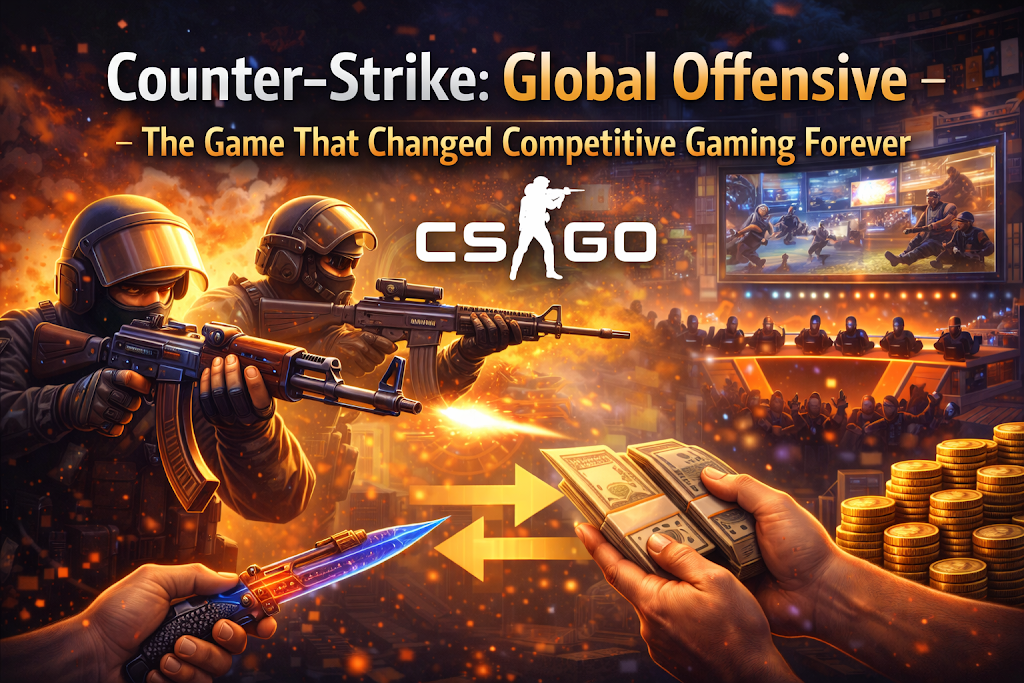
When Valve released Counter-Strike: Global Offensive in 2012, few predicted it would become one of the most influential games in esports history. Over a decade later, CSGO remains a dominant force in competitive gaming, boasting millions of active players, massive tournament prize pools, and a thriving ecosystem that extends far beyond the game itself.
CSGO’s success stems from its perfect blend of accessible gameplay and near-infinite skill ceiling. New players can grasp the basics within hours, yet professional players spend thousands of hours mastering mechanics, tactics, and game sense. This balance has created a sustainable competitive scene that continues growing year after year.
The Evolution of Counter-Strike
Counter-Strike’s origins trace back to 1999 as a Half-Life mod created by Minh “Gooseman” Le and Jess Cliffe. The concept was simple: terrorists versus counter-terrorists in objective-based rounds. This asymmetric gameplay created tension and required different strategies depending on which side you played.
Counter-Strike 1.6 became the gold standard for competitive FPS games in the early 2000s. LAN cafes worldwide hosted Counter-Strike tournaments, and early esports organizations built their reputations on CS 1.6 dominance. The game’s tactical depth and team-based gameplay made it perfect for competitive play.
Counter-Strike: Source arrived in 2004, bringing updated graphics and Source engine physics. While visually superior, many competitive players preferred 1.6’s mechanics, creating a split in the community. This division would persist until Global Offensive finally united the player base under a single title.
CSGO launched in August 2012 to mixed initial reception. Early versions felt clunky compared to 1.6 or Source, and the competitive scene was slow to transition. Valve’s commitment to continuous updates and community feedback gradually transformed CSGO into the polished competitive experience it is today.
The Arms Deal Update: A Turning Point
The August 2013 Arms Deal update revolutionized CSGO by introducing weapon skins. Players could now customize their weapons’ appearance through randomly dropped cosmetic items, acquired via cases that required keys to open. This seemingly minor feature would transform the game’s economy and culture.
Weapon skins created an entirely new dimension to CSGO. Rare skins became status symbols, with items like the AWP Dragon Lore or Karambit Fade commanding thousands of dollars. The Steam Community Market enabled official trading, legitimizing the skin economy and creating a marketplace worth billions.
The skin economy spawned entire industries around CSGO. Trading communities emerged where players bought, sold, and exchanged skins. CSGO Gambling Sites proliferated, allowing players to wager skins on various games. Streamers built audiences by showcasing rare skins and unboxing cases. The game had become more than just a competitive shooter—it was a complete ecosystem.
This economic layer added longevity to CSGO’s appeal. Even players who rarely competed seriously remained engaged through skin collecting and trading. The skin market created retention mechanisms beyond pure gameplay enjoyment, contributing to CSGO’s sustained popularity.
Gameplay Mechanics That Define Excellence
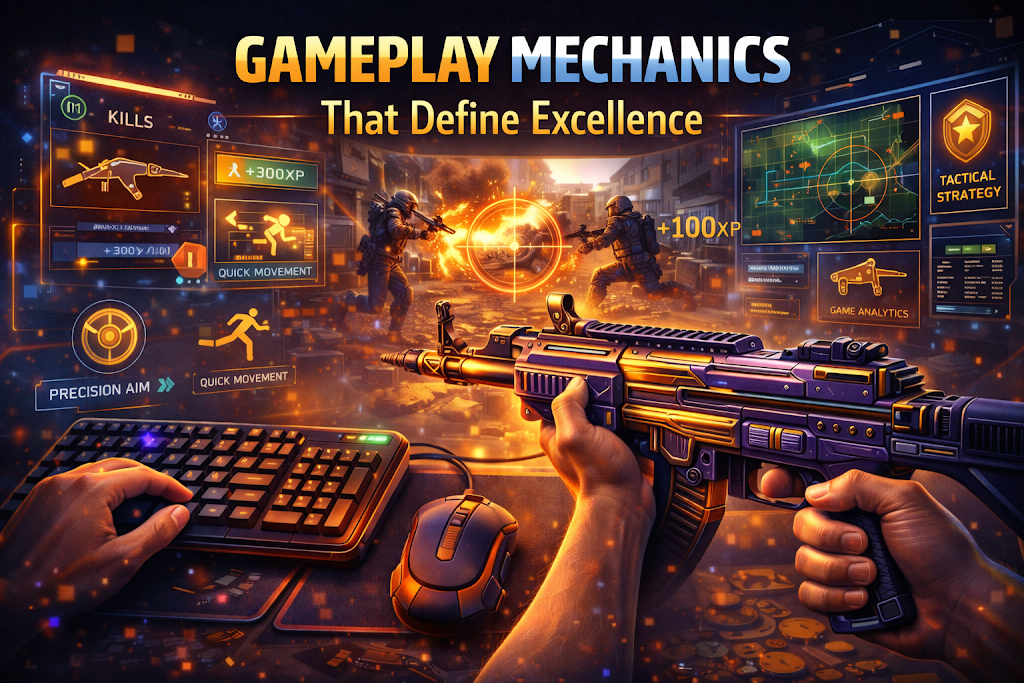
CSGO’s competitive success stems from fundamentally solid gameplay mechanics refined over years of updates. Understanding these mechanics reveals why the game remains so compelling for both casual and professional players.
Movement and Accuracy: CSGO requires precise movement control. Players must stop moving to shoot accurately, creating a rhythm of peeking, stopping, firing, and returning to cover. Counter-strafing—tapping the opposite movement key to stop instantly—separates skilled players from beginners. This mechanic alone provides hundreds of hours of skill development.
Recoil Patterns: Every weapon has a fixed spray pattern that skilled players memorize. The AK-47’s iconic inverted ‘7’ pattern or the M4A4’s vertical climb become second nature to experienced players. Mastering recoil control transforms average players into deadly opponents.
Economy Management: CSGO’s round-based economy adds strategic depth beyond pure shooting skill. Teams must manage money earned from kills, round wins, and objective completions. Deciding when to save, force-buy, or full-buy creates meta-game decisions that impact entire matches.
Utility Usage: Smokes, flashes, molotovs, and HE grenades enable tactical play. Professional teams spend countless hours practicing utility lineups for every map. A perfectly timed smoke can shut down an entire bombsite, while coordinated flashbangs enable clean site entries. Utility usage separates coordinated teams from random pub players.
The Professional Scene
CSGO’s esports ecosystem is among gaming’s most developed and professional. Major tournaments regularly fill arenas with thousands of fans, while online viewership reaches millions. The scene’s infrastructure rivals traditional sports in organization and presentation quality.
Valve’s Major Championship system provides CSGO with a structured competitive calendar. Two Majors per year offer $1 million prize pools and the prestigious Major trophy. These events feature elaborate production, extensive coverage, and the best teams worldwide competing for glory.
Beyond Majors, third-party organizers like ESL, BLAST, and PGL run extensive tournament circuits. Top teams compete nearly year-round, with events offering substantial prize money and ranking points. This constant competitive calendar maintains audience interest and provides stable careers for professional players.
Regional leagues like ESL Pro League and BLAST Premier ensure competitive opportunities across different geographical areas. North America, Europe, South America, Asia, and Oceania all have established scenes with local tournaments feeding into international competitions.
The tier system creates clear progression paths from amateur to professional play. Tier 1 teams compete in Majors and premier events, while tier 2 and 3 teams grind through qualifiers and smaller tournaments, hoping to break through to elite status.
Legendary Teams and Players
CSGO history is filled with legendary teams that dominated their eras. Fnatic’s 2015 dominance, featuring three major victories, established them as one of gaming’s greatest dynasties. SK Gaming (later Luminosity Gaming) brought Brazilian Counter-Strike to prominence with back-to-back Major wins in 2016.
Astralis revolutionized competitive CSGO with their “Astralis era” from 2018-2019. Their tactical approach, mental coaching, and strategic timeouts raised professional play’s standards. Four Major victories in two years cemented their legacy as perhaps CSGO’s greatest team ever.
Individual players have achieved superstar status within the scene. Players like s1mple, NiKo, dev1ce, and ZywOo are household names among CSGO fans, known for superhuman plays and consistent excellence. Their highlight reels feature impossible shots, clutch rounds, and game-winning performances under immense pressure.
The IGL (In-Game Leader) role showcases CSGO’s strategic depth. Players like gla1ve, FalleN, and karrigan are celebrated not for mechanical skill but for tactical genius. Their ability to read opponents, call strategies mid-round, and adapt to enemy tactics demonstrates the game’s cerebral dimension.
Map Design Excellence
CSGO’s competitive map pool represents some of gaming’s most refined level design. Each map offers unique strategic possibilities while maintaining competitive balance. Understanding these maps is essential for serious play.
Dust II: CSGO’s most iconic map, Dust II embodies the game’s fundamental design principles. Clear sightlines, multiple rotation routes, and balanced bombsites create endless strategic possibilities. Its simplicity makes it perfect for all skill levels while offering depth for professional play.
Inferno: The narrow corridors and tight corners of Inferno favor utility usage and coordinated executes. Teams must work together to take map control, making it a showcase for teamwork and communication.
Mirage: Perhaps CSGO’s most balanced map, Mirage offers opportunities for every playstyle. Aggressive players can take mid control, while patient teams can execute set strategies. This versatility makes it a consistent competitive pick.
Nuke: The vertical nature of Nuke creates unique strategic challenges. Rotating between sites requires careful timing and coordination. Sound cues become crucial for determining enemy positions across multiple levels.
Ancient: One of the newer competitive maps, Ancient demonstrates Valve’s continued commitment to evolving the map pool. Its incorporation shows that even established games can successfully introduce fresh content.
Community and Content Creation
CSGO’s community extends far beyond players competing in matches. Content creators, analysts, workshop mapmakers, and skin designers all contribute to the game’s ecosystem.
YouTube analysts like voo, TheWarOwl, and NadeKing provide educational content teaching everything from basic mechanics to advanced strategies. These creators help new players improve while offering entertainment value that extends CSGO’s reach beyond active players.
Twitch streamers bring personality and entertainment to CSGO viewing. Professional players streaming practice sessions offer behind-the-scenes looks at elite-level play. Entertainment-focused streamers like shroud (in his CSGO days) demonstrated that personality and skill together create compelling content.
The Workshop community creates custom maps, game modes, and weapon finishes. Community-created content that achieves popularity can be officially integrated into the game, with creators receiving revenue shares. This collaboration between Valve and the community ensures constant fresh content.
Third-party platforms like FACEIT and ESEA provide alternatives to official matchmaking with stricter anti-cheat, higher skill levels, and competitive leagues. These platforms cater to serious players seeking more competitive environments than standard ranked play.
Anti-Cheat and Competitive Integrity
Maintaining competitive integrity remains one of CSGO’s ongoing challenges. Valve Anti-Cheat (VAC) works to detect and ban cheaters, but determined cheat developers constantly develop new methods. The cat-and-mouse game between anti-cheat developers and cheat creators never ends.
Professional scenes employ additional security measures. Tournament organizers use hardware monitoring, network isolation, and manual oversight to prevent cheating at LAN events. Despite these precautions, occasional scandals still rock the scene when evidence of past cheating emerges.
Third-party anti-cheat systems like FACEIT’s client or ESEA’s intrusive driver provide stronger detection than VAC alone. While these systems raise privacy concerns due to their deep system access, many competitive players accept the trade-off for fairer matches.
Community policing through Overwatch allows experienced players to review suspected cheaters’ gameplay footage. This crowdsourced approach supplements automated detection, though it’s imperfect and sometimes results in false positives or negatives.
The Role of Updates and Balance
Valve’s approach to CSGO updates balances innovation with preserving what works. Unlike many competitive games that frequently overhaul core mechanics, CSGO evolves gradually, ensuring that invested skill remains relevant.
Weapon balance patches occasionally shake up the meta. Adjustments to the AUG in 2019 briefly made it dominant before nerfs restored balance. These periodic shifts prevent stagnation while avoiding the complete meta upheavals that plague some competitive games.
Map updates refresh competitive play. Updated versions of classic maps like Dust II, Inferno, and Nuke brought visual improvements and minor layout changes that modernized gameplay while respecting classic design. New map additions like Ancient provide fresh strategic challenges.
Quality-of-life improvements accumulate over time. Better netcode, refined hitboxes, and improved anti-cheat all enhance the competitive experience without fundamentally changing what makes CSGO special. This incremental approach maintains the game’s core identity while addressing issues.
Accessibility and Barrier to Entry
CSGO’s free-to-play conversion in 2018 dramatically expanded its player base. Removing the purchase price eliminated the financial barrier, allowing anyone to try the game. This transition, combined with Prime Status for serious players, balanced accessibility with maintaining competitive integrity.
The game runs on relatively modest hardware, making it accessible even in regions where high-end gaming PCs are uncommon. This technical accessibility contributes to CSGO’s global reach, enabling participation from developing regions where other esports struggle to gain traction.
Learning resources abound for new players. YouTube tutorials, written guides, workshop training maps, and helpful community members create multiple paths for improvement. While the skill ceiling is high, the abundance of educational content smooths the learning curve.
Casual game modes provide low-pressure environments for new players to learn. Deathmatch, Arms Race, and Casual matches allow practice without ranked pressure. This gradient of competitive intensity accommodates players at all commitment levels.
Cultural Impact Beyond Gaming
CSGO’s influence extends beyond gaming into broader internet culture. Memes, catchphrases, and references from the game permeate online spaces. Phrases like “Rush B” or “GG EZ” originated or popularized through Counter-Strike have become part of gaming vernacular.
The game has introduced gaming concepts to mainstream audiences. Terms like “clutch,” “eco round,” and “force buy” are now understood by people who’ve never played the game. CSGO’s visibility in esports has contributed to gaming’s broader cultural acceptance.
Real-world skills transfer from CSGO play. Team communication, strategic thinking, pressure management, and coordinated execution all apply beyond gaming. Professional teams increasingly emphasize these transferable skills when discussing their players’ development.
The Future of CSGO
Counter-Strike 2, announced in 2023, represents the next evolution of the franchise. Built on Source 2 engine, it promises improved graphics, better netcode, and refined mechanics while maintaining the core gameplay that makes Counter-Strike special.
The transition from CSGO to CS2 raises questions about the future. Will the competitive scene fully migrate? How will skin economies transfer? What new features will enhance or alter gameplay? These uncertainties create both excitement and anxiety within the community.
Regardless of CS2’s ultimate form, CSGO’s legacy is secure. It defined competitive FPS gaming for over a decade, proving that careful balance between accessibility and depth creates enduring appeal. Future tactical shooters will inevitably be compared to the standard CSGO established.
Conclusion
Counter-Strike: Global Offensive transformed from a questionable sequel into one of gaming’s most successful and influential titles. Its combination of refined mechanics, competitive depth, vibrant economy, and professional scene created a complete gaming ecosystem that extends far beyond simply playing matches.
The game’s longevity demonstrates that solid fundamentals and responsive development can sustain success for over a decade. While graphics and technology evolve, the core tactical gameplay that made Counter-Strike great in 1999 remains relevant today.
CSGO’s impact on esports, gaming culture, and digital economies will be felt for years to come. It proved that free-to-play models can coexist with competitive integrity, that cosmetic items can drive massive economies, and that tactical shooters could match MOBAs and battle royales in popularity.
As the community looks toward Counter-Strike 2 and beyond, CSGO’s achievements stand as testament to what happens when developers, players, and communities work together to create something special. Few games achieve such sustained excellence—Counter-Strike: Global Offensive earned its place among gaming’s all-time greats.
Last updated: March 2026