The Sovereignty of the Vernacular
Every sermon carries freight: dogma forged over centuries, pastoral urgency born of soil and sweat. When that sermon crosses a linguistic border, nothing neutral happens. Meaning either survives, or it fractures. Church interpreters stand at the live edge of proclamation, rendering doctrine in real time. Translation teams labor in parallel, refining manuscripts, subtitles, devotionals, and study materials so the lexicon of faith does not erode under pressure.
Coordination between these callings is not administrative trivia. It is a theological alignment. The interpreter must understand the terminological decisions embedded in the translated text. The translation team must anticipate the oral realities of cadence, idiom, and congregational response. Without shared glossaries, agreed doctrinal phrasing, and disciplined revision cycles, distortion creeps in. A single misaligned term can recast covenant as contract, grace as sentiment. Small shifts. Large consequences.
Lexicon as Bridgehead
Professional coordination begins with a unified terminology framework. Translation teams construct controlled vocabularies for recurring theological concepts, such as atonement, sanctification, and covenantal faithfulness, anchored in the source text and tested against the receptor culture. Church interpreters receive these lexicons before stepping onto the platform. Not as scripts, but as guardrails.
This exchange forms a bridgehead against doctrinal drift. When an interpreter encounters an unplanned metaphor or pastoral aside, the established lexicon provides stability. The translation team, in turn, reviews recorded interpretations to detect inconsistencies, regional nuances, or semantic erosion. Feedback is precise. Tone matters. Accuracy matters more.
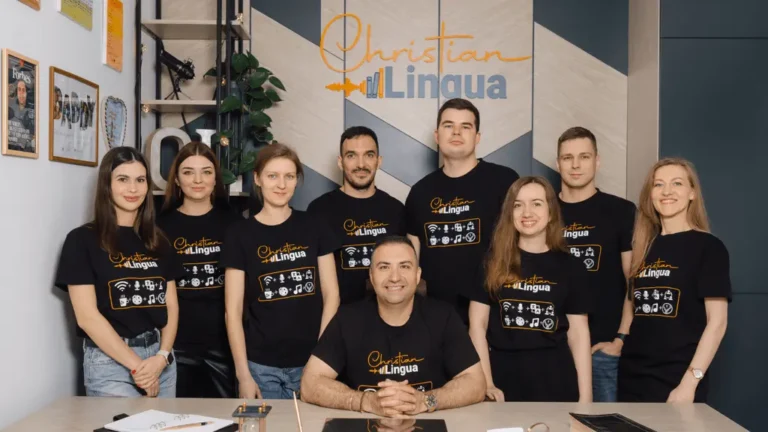
Within the Christian Lingua agency, this coordination is structured rather than improvised. Project managers align interpreters and translators under a shared mandate: protect meaning while honoring the dignity of vernaculars. Heart language is not sentimentality; it is the medium through which conviction penetrates.
Ink, Voice, and Cultural Resonance
Written translation and live interpretation operate on different terrains. Ink tolerates revision. Voice does not. The translation team can weigh syntax, compare manuscripts, and interrogate commentaries. The interpreter must decide within seconds. Coordination ensures that both disciplines draw from the same theological well.
Cultural resonance complicates the task. Certain metaphors rooted in agrarian Israel may require recalibration in urban Asia or post-Soviet Europe. The translation team researches the sociolinguistic context. The interpreter embodies it before a listening congregation. Technical precision alone cannot carry the message; resonance without precision mutates doctrine. Alignment between teams guards both.
Christian Lingua bridges the gap between the original message and the target audience’s heart language through layered review systems, theological vetting, and culturally informed consultants. The objective is not mechanical equivalence but faithful transmission, content that sounds native without surrendering orthodoxy.
Mandate Under the Great Commission
The Great Commission is multilingual by design. Every tribe. Every tongue. That mandate demands more than goodwill. It demands disciplined coordination between church interpreters and translation teams who recognize the weight of what passes through their mouths and keyboards.
Global ministry cannot afford casual phrasing or fragmented workflows. Visit Christian Lingua to secure alignment between proclamation and translation, and ensure that the message entrusted to the Church does not thin out at the border but strikes the conscience in every language where it is spoken.