এখানে যা পাবেন
A New Era of Intelligent Biotechnology
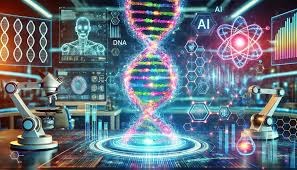
bioen2025 showcased a growing convergence of artificial intelligence and bioengineering, signaling a transformative shift in how biological systems are designed, optimized, and deployed. From metabolic pathway optimization to predictive modeling of cellular behavior, AI is now at the heart of innovation in biotechnology. This integration is not just speeding up research—it is redefining the entire process of bioengineering, making it more precise, scalable, and adaptable.The conference highlighted numerous projects that demonstrated AI’s ability to handle complex biological data, predict outcomes, and design solutions that would be impossible using traditional methods alone. This represents a turning point where biology and computation no longer operate separately but instead collaborate to unlock new possibilities across healthcare, agriculture, energy, and industrial applications.
Predictive Modeling for Smarter Organism Design
One of the most prominent trends at BioEn 2025 was the use of AI to predict cellular and organismal behavior. Machine learning algorithms are now capable of analyzing vast datasets of genetic, proteomic, and metabolic information to forecast how modifications will impact biological systems.Researchers demonstrated AI-driven platforms that optimize genetic edits and metabolic pathways for engineered microbes and plants. This predictive capability reduces trial-and-error experimentation, shortens development timelines, and increases the reliability of engineered organisms. Companies are now able to design complex bio-circuits and synthetic pathways with a level of precision previously unattainable, making AI an indispensable partner in bioengineering.
Automated Laboratory Workflows
AI is increasingly being embedded into laboratory workflows to streamline experimentation. At BioEn 2025, several demonstrations highlighted robotic systems integrated with machine learning algorithms capable of designing, executing, and analyzing experiments autonomously.These automated platforms can rapidly test thousands of genetic constructs or enzyme variants, analyze outcomes, and feed results back into predictive models. This iterative cycle dramatically accelerates the pace of discovery, allowing researchers to focus on high-level problem-solving while AI handles routine and complex experimental tasks.Such automation reduces costs, improves reproducibility, and expands the scale at which bioengineering projects can operate, bridging the gap between laboratory research and industrial application.
AI-Guided Metabolic Engineering
Metabolic engineering was a major focus at BioEn 2025, with AI used to optimize cellular pathways for bio-manufacturing, biofuels, and high-value chemicals. Machine learning algorithms can predict bottlenecks, suggest gene modifications, and model enzyme efficiencies, enabling the creation of microbial strains with superior performance.The conference highlighted examples where AI-designed pathways significantly increased yields of biofuels and specialty chemicals while minimizing resource inputs. This capability not only enhances industrial efficiency but also supports sustainability goals by reducing energy consumption and waste generation.
Personalized Medicine and Therapeutic Design
AI-driven bioengineering is also transforming healthcare, a trend prominently featured at BioEn 2025. Researchers presented systems capable of designing personalized therapies based on patient-specific genetic and metabolic profiles. AI algorithms can suggest optimal protein therapies, gene edits, or cellular interventions tailored to an individual’s unique biology.This precision approach accelerates drug development, improves treatment efficacy, and reduces the likelihood of adverse effects. As AI becomes more sophisticated, the boundary between synthetic biology and personalized medicine continues to blur, promising a future where treatments are dynamically engineered for each patient.
AI for Environmental and Agricultural Solutions
Another key trend was the application of AI-enhanced bioengineering to agriculture and environmental management. AI models can optimize plant growth, predict stress responses, and design microbes capable of remediating pollutants.For example, researchers demonstrated AI-guided microbial consortia capable of breaking down waste materials or enhancing soil fertility, providing scalable solutions for sustainable agriculture. By predicting environmental interactions and organism performance, AI reduces the risk associated with deploying engineered organisms outside controlled laboratory settings.
Digital Twins in Bioengineering
BioEn 2025 also highlighted the emergence of digital twin technology in bioengineering. Digital twins are virtual models of biological systems that replicate real-world behavior. AI-powered digital twins can simulate cellular processes, fermentation dynamics, or entire ecosystems, allowing researchers and engineers to test interventions in silico before actual deployment.These virtual simulations improve design accuracy, reduce resource consumption, and accelerate development timelines. Industries ranging from pharmaceuticals to industrial biotechnology are beginning to adopt digital twin models to optimize production, reduce costs, and improve sustainability.
The Future of AI-Integrated Bioengineering
The trends showcased at BioEn 2025 make it clear that AI is not just a tool but a strategic partner in bioengineering. From predictive modeling and automation to metabolic optimization and environmental applications, AI enhances every stage of the bioengineering lifecycle.Looking ahead, AI integration is expected to drive a new wave of innovation, enabling smarter, faster, and more sustainable solutions. As algorithms become more advanced and data-rich, bioengineers will be able to tackle increasingly complex challenges, from designing entirely new organisms to creating adaptive bio-based industrial systems.BioEn 2025 demonstrated that the future of biotechnology will be defined by the synergy between human ingenuity and machine intelligence, creating a landscape where biology is engineered with unprecedented precision, efficiency, and impact.